The gamble will crash
...but, if we're lucky, a few good lobbies will remain

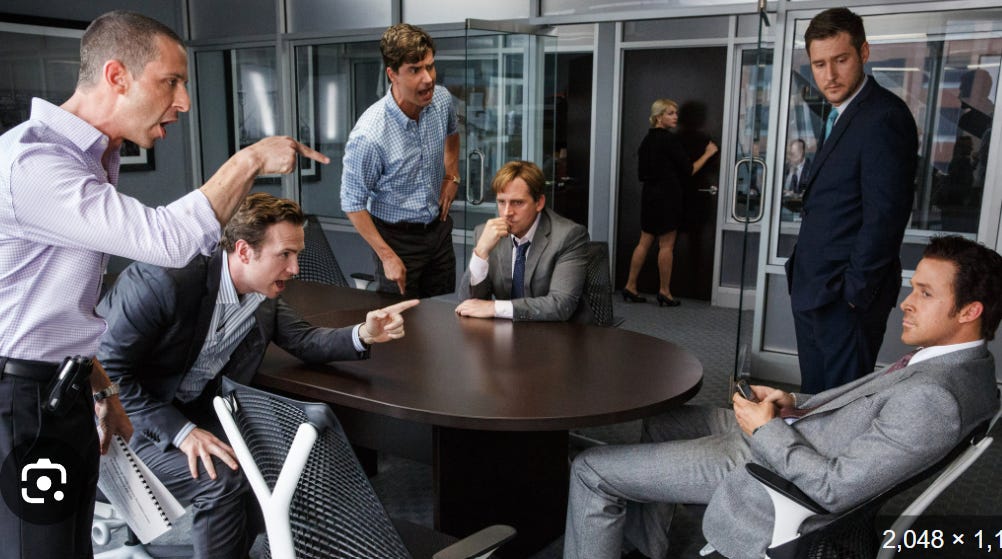
It just so happened that in the same week that I listened to The Atlantic writer McKay Coppins discussing his piece on the great casino-ification of America I also ended up watching The Big Short, the now ten year old nerd classic about the financial crash of 2008. Today, Americans - mostly men - are putting $160b into legal gambling, and not only in sports, but also in the plotlines of TV shows, electoral outcomes, and US government actions abroad. Certain people from the current US administration had allegedly reportedly been placing bets on certain military strikes happening just before they took place. The Rest is Entertainment podcast a couple of months ago discussed the fan betting forums around many of the popular TV shows and the pressure they exert on the scriptwriters. I’m sure we’ve all had online gambling ads following us around the internet, and I wonder if, after months of having to sit through Points Bet Canada commercials whenever I try to watch a YT video, Ontario in particular is pretty lax about gambling advertising. Online gambling addiction among men is through the roof, as Coppins’ work demonstrates in gory detail. A life-long Mormon who avoided betting of any kind, Coppins received a few thousands of spending money from his employer and their approval to go native and start betting for the purposes of research, and quickly found himself addicted.
The Big Short, as you may remember, is about a handful of unconnected and comparatively eccentric Wall Street investors who spotted the crash coming and decided to bet against the booming real estate just before it crashed, spiraling down the global economy. Because I have no investments to speak of, I tend to forget, or suppress from memory, that most of our wealth today is underpinned by gambling - of the socially encouraged kind. Under the innocent-sounding word often heard in the media without much explanation, “the markets” (how are they doing on any given day? are they up, are they down?) are in effect a network of interconnected gambling markets of savings accounts - individual, corporate, union and state. Fine: a special, dynamic type of savings accounts, but savings they still are.
Every now and again it occurs to me that I should perhaps open up an investment account but then talk myself out of it. (I once had a job in which part of the salary was a modest investment portfolio. The periodic reports we’d get on options read like runes on lottery scratch tickets, except with abstract gratification and loss.) I can’t get past the normalized gambling aspect of it - and my awareness probably comes from my having grown up in a communist country. How is this normal and encouraged - and underregulated, everywhere? - I mutter to myself. When it’s going well, “everyone” is richer. When it isn’t… but we don’t have to think about that right this very moment.
For a peaceful life in capitalism, you have to be able to forget many things on a daily basis. In this one issue and it only, I feel an inner Bernie surging at most illogical moments. How do you balance growth with the massive yet creaking welfare system, o politician? But the Wall Street! How can we advocate for carbon neutrality when fossil fuels are in-built into every aspect of our lives? Never mind that, think of the markets isn’t it all crazy? Is it going to rain today? THE STOCK EXCHANGE! How can we all get on with our lives when we all live on top of a flimsy infrastructure of slot machines?!
Our current prime minister comes from this milieu of sophisticated gambling and has had jobs in the High Status Casino since leaving school. He apparently has so many investments that he can’t be expected to be aware of all of them. As Peter Menzies observes almost every week in his media criticism newsletter The Rewrite, Carney is also extremely underreported in Canadian media, a PM on a protracted media honeymoon. Recently he announced that since the Vancouver condo bubble deflated, the government will… sort of bail the Vancouver condo developers under the guise of creating affordable housing. Rather than letting the markets correct themselves.
There was gambling in condo development for decades in Toronto - and I expect it’s the same in Vancouver. Units were built, barely livable, for a human and maybe a pet, at inflated prices because the speculators would buy them while still in construction and sell them for more money to future residents. Critics of uncontrolled immigration and open borders to investment add here that the high net worth foreign citizens pied-à-terre-ing and reselling, as well as buying to lease and appreciate towards a later resale, greatly contributed to the inflation of the housing prices, and at this point I would agree. As long as there’s some wealth creation appearing somewhere for a minute - was the thinking of people like Doug Ford and that Roberts guy Carney’s buddy in Vancouver - and some middle class homeowners benefitted from the real estate over-appreciation, oh well, that’s tickety-boo enough for us. This is why I salute people like the young man running to become leader of the Ontario Liberals, Eric Lombardi, who tells the unvarnished truth. The only way for the unaffordability of housing to be tackled is for the prices to come down and for some people to not get the expected return on real estate investment. Anyone telling you otherwise can’t be taken seriously. (You could all do worse than check out Eric here.)
But enough about the nightmare that is Toronto real estate. I’ve actually meant to stay with The Big Short.
Before the movie, I had no idea about the number of meetings that take place in the lobbies of investment banks. If you pass the lobby meeting stage and get invited upstairs for a meeting, then you’re doing well. In a number of scenes in the film, the make-or-break encounter takes place in the lobby. Is this also the case in law firms and tech firms? (Doesn’t Google have that building a block down, on Richmond?)
The stressful lobby meeting phenomenon is something that appears before my mind each time I bike in the Adelaide bike lane, which I’ve rhapsodized about previously, or when on King St.
→ Previously on Long Play: Why bicycle in Toronto?
The other day I decided to walk by those lobbies on Adelaide between Church St and Spadina and give them a closer look. Consider this another edition of A Good Walk, and a tour recommendation if you are visiting or have visitors this summer. All of the spaces below are from the great office tower era: I can’t think of more than a couple of major recent developments that are commercial use only. Notable absence: the Mies TD towers, which are over on King and Wellington.
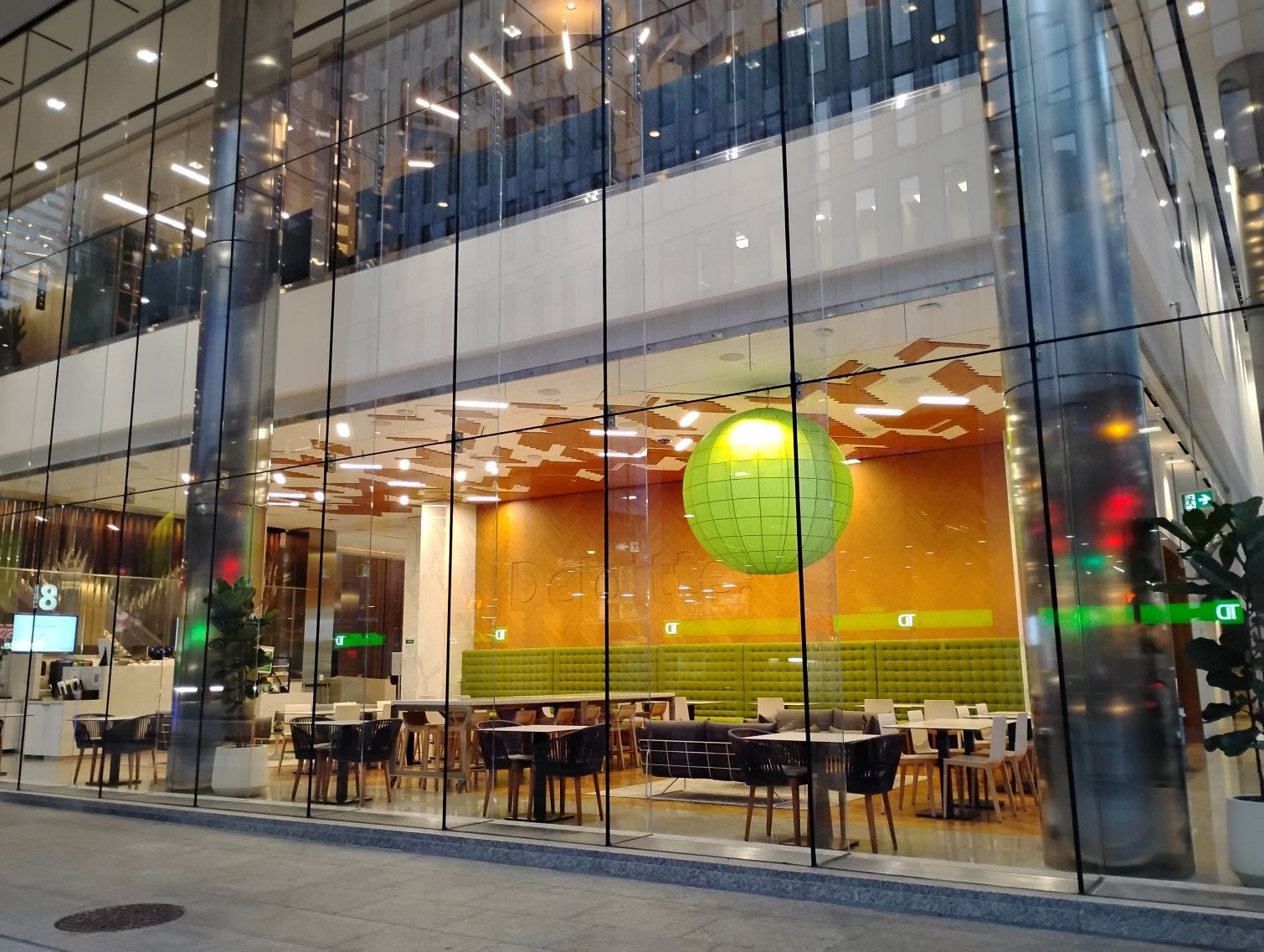
Since I’m skipping some of the characterful buildings on Adelaide E. like the Ontario Heritage and the Lamsden building because they don’t meet the lobby criterion, we start with the Deloitte cafe in the Bay Adelaide complex that spans a gigantic block.
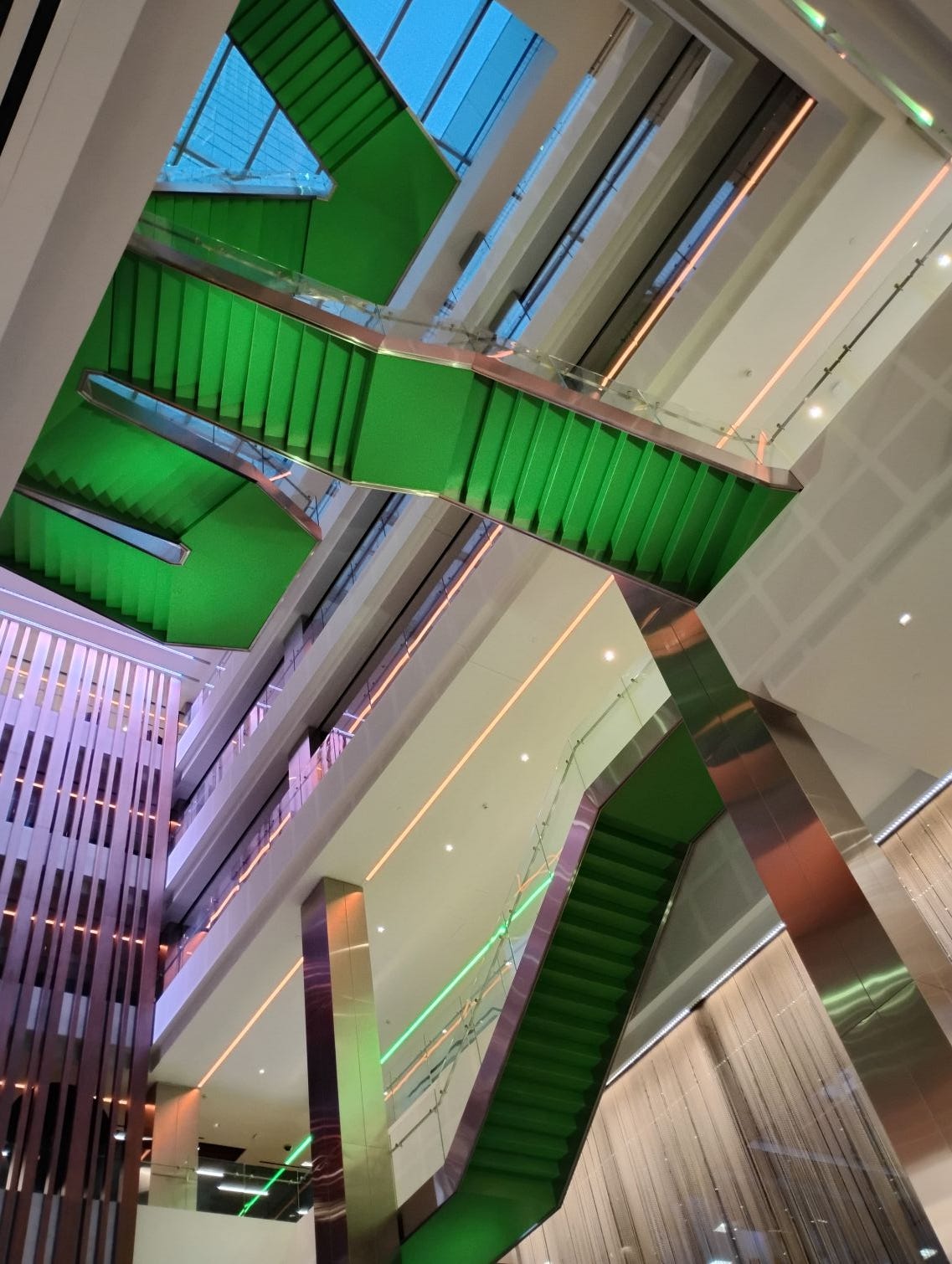
Inside the building, if you look up, an Escherian set of staircases:
Further west as you walk past the Bay-Adelaide mothership, a different lobby altogether:
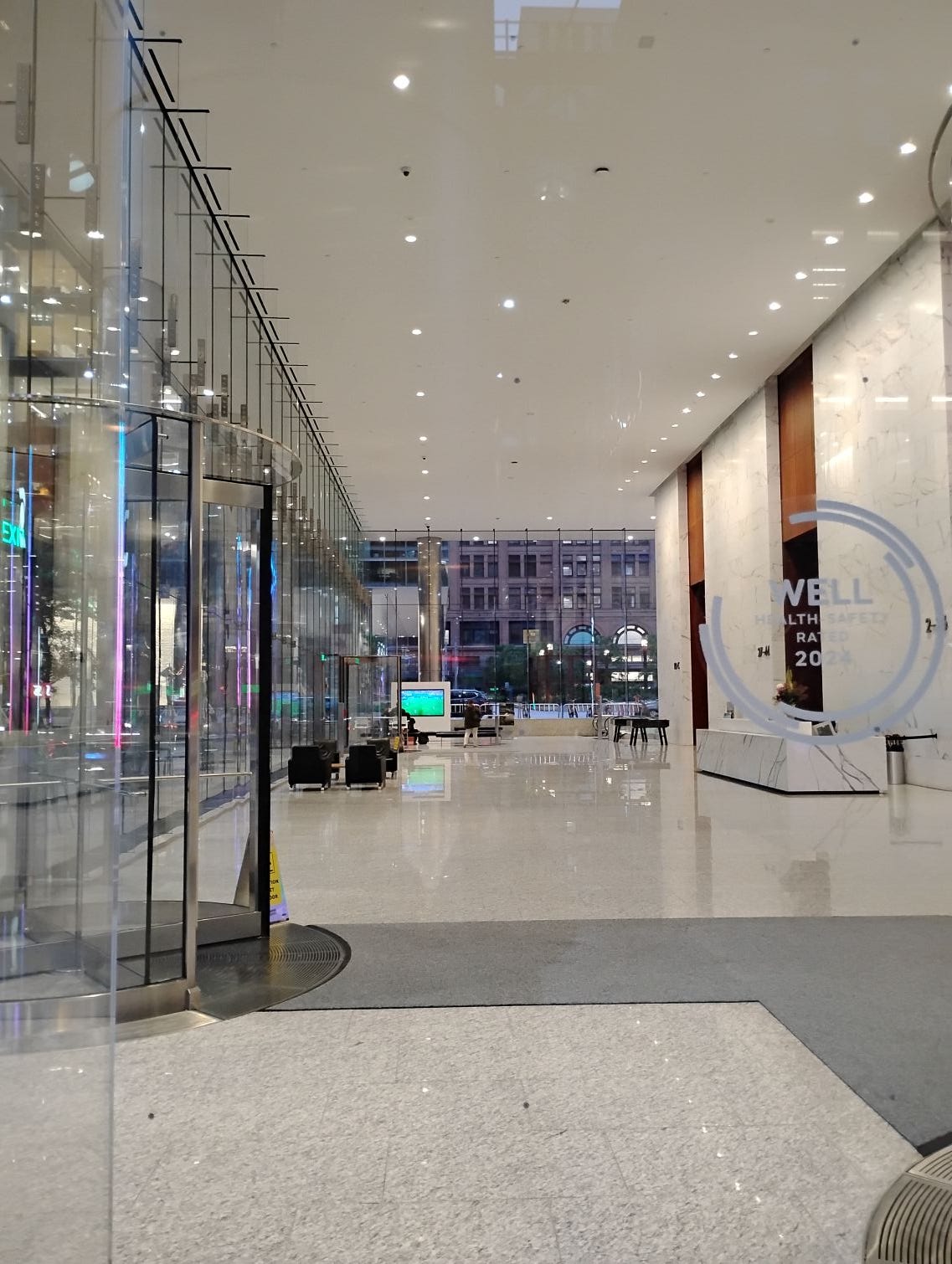
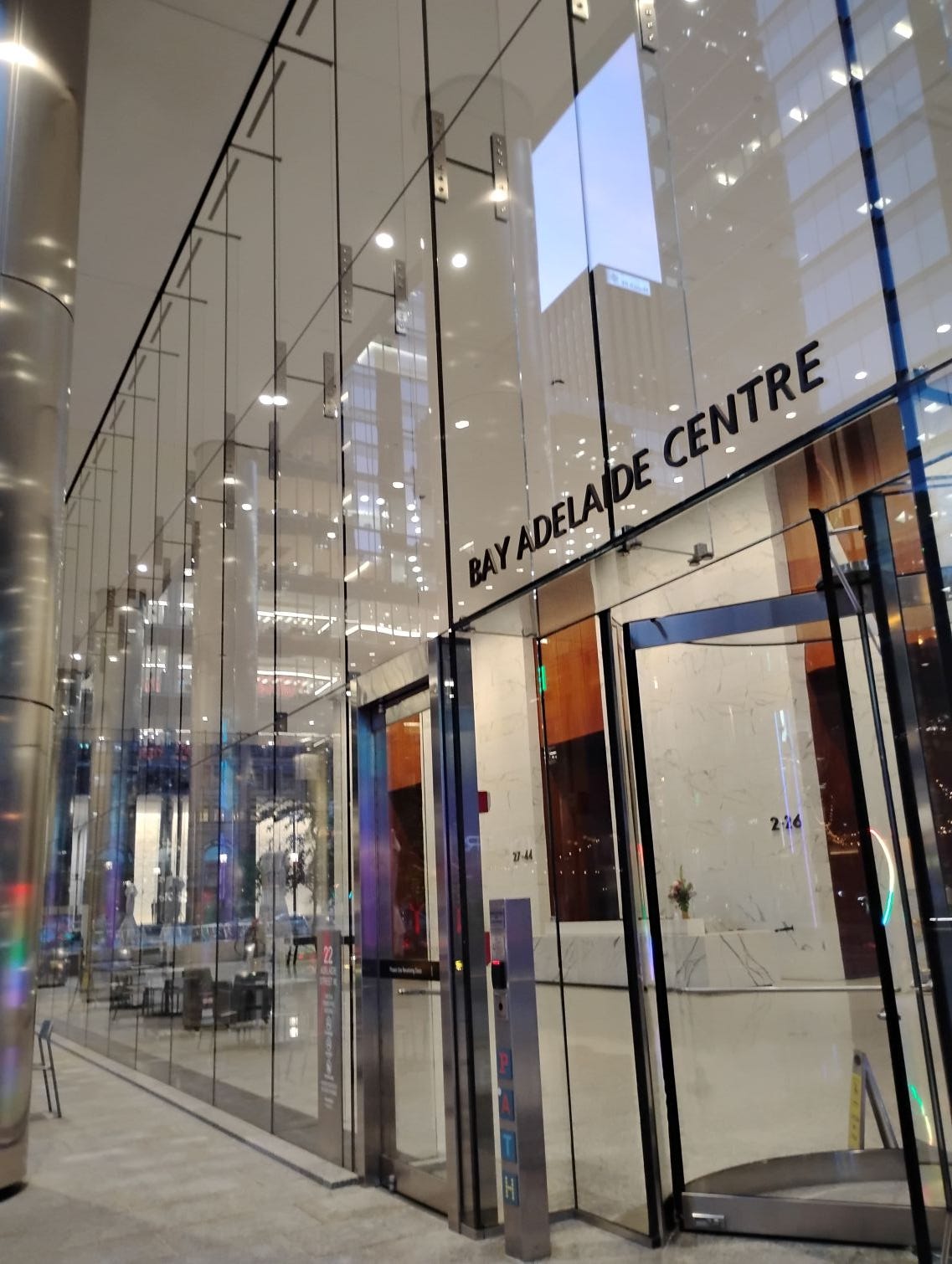
There’s artwork by Micah Lexier inside which is easy to miss as abstract lobby decoration. The signs outside point to a lot of insurance companies and law firms, and, surprise, one publisher: HarperCollins.
You cross the street and push the door to the Scotia tower. The Adelaide side lobby:
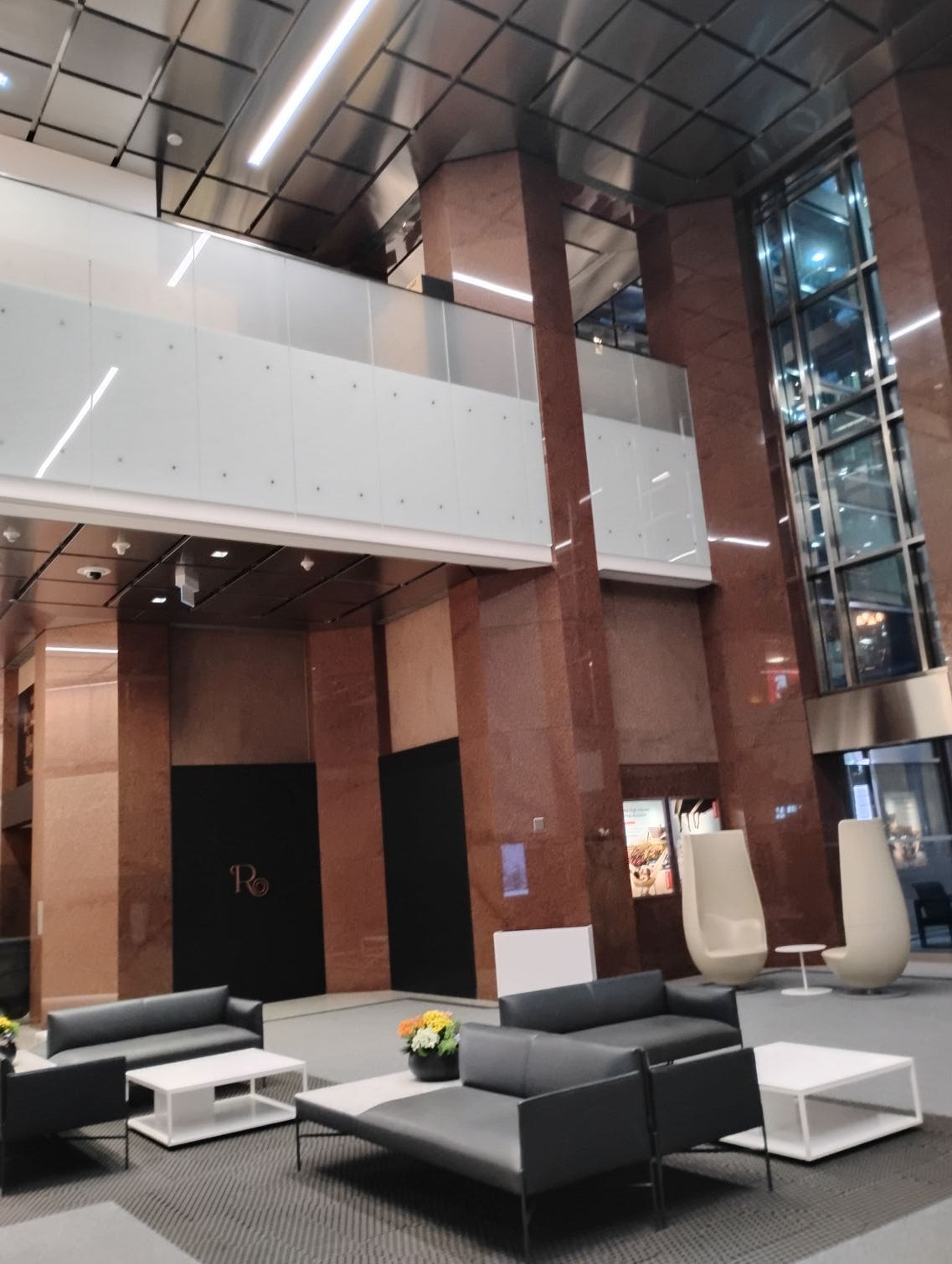
Further inside, towards the working bank section of the atrium, this artwork:
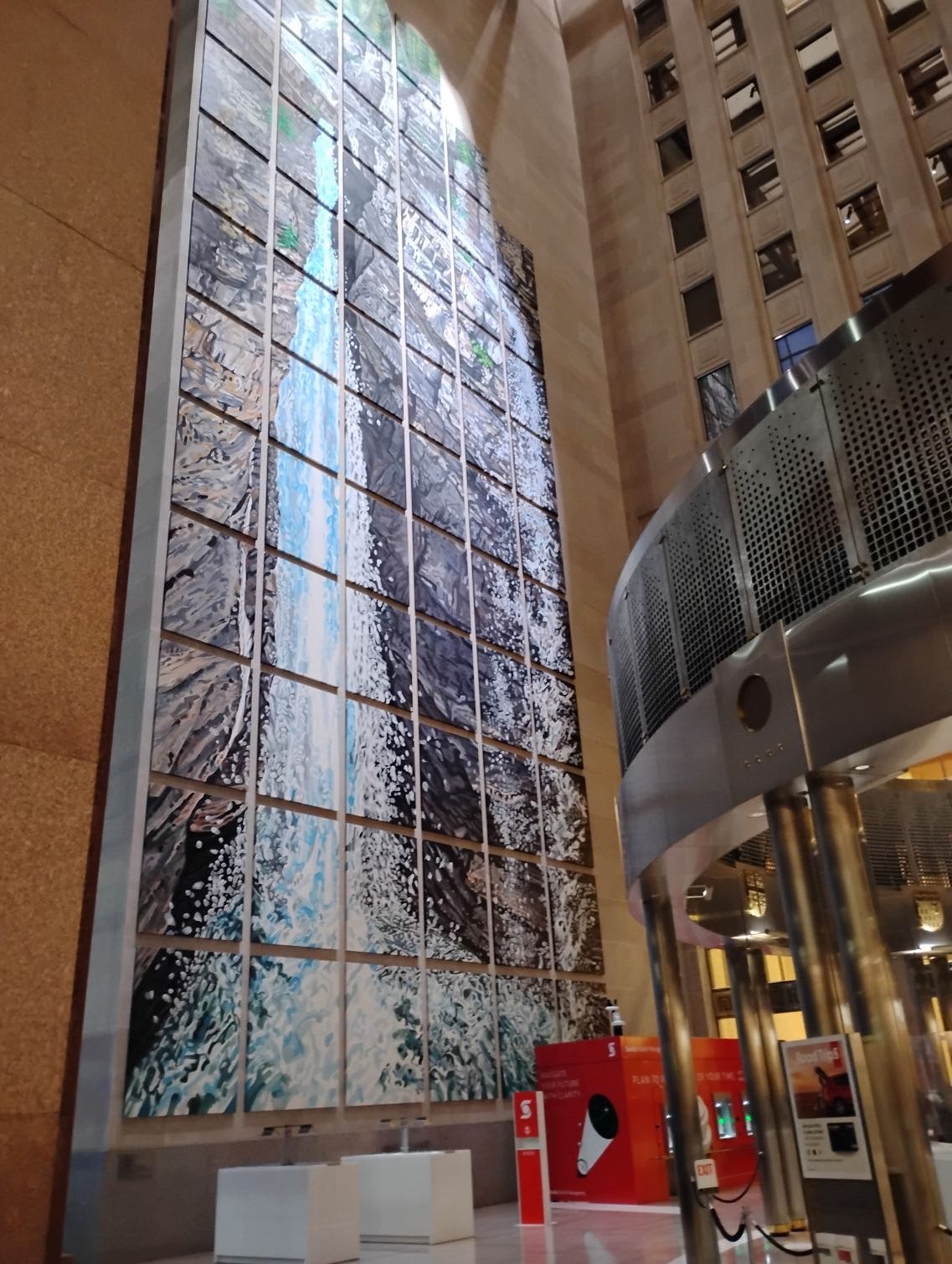
11-storey tall apparently, this is a life-size replica of an actual waterfall in Banff, by Calgary artist Derek Michael Besant.
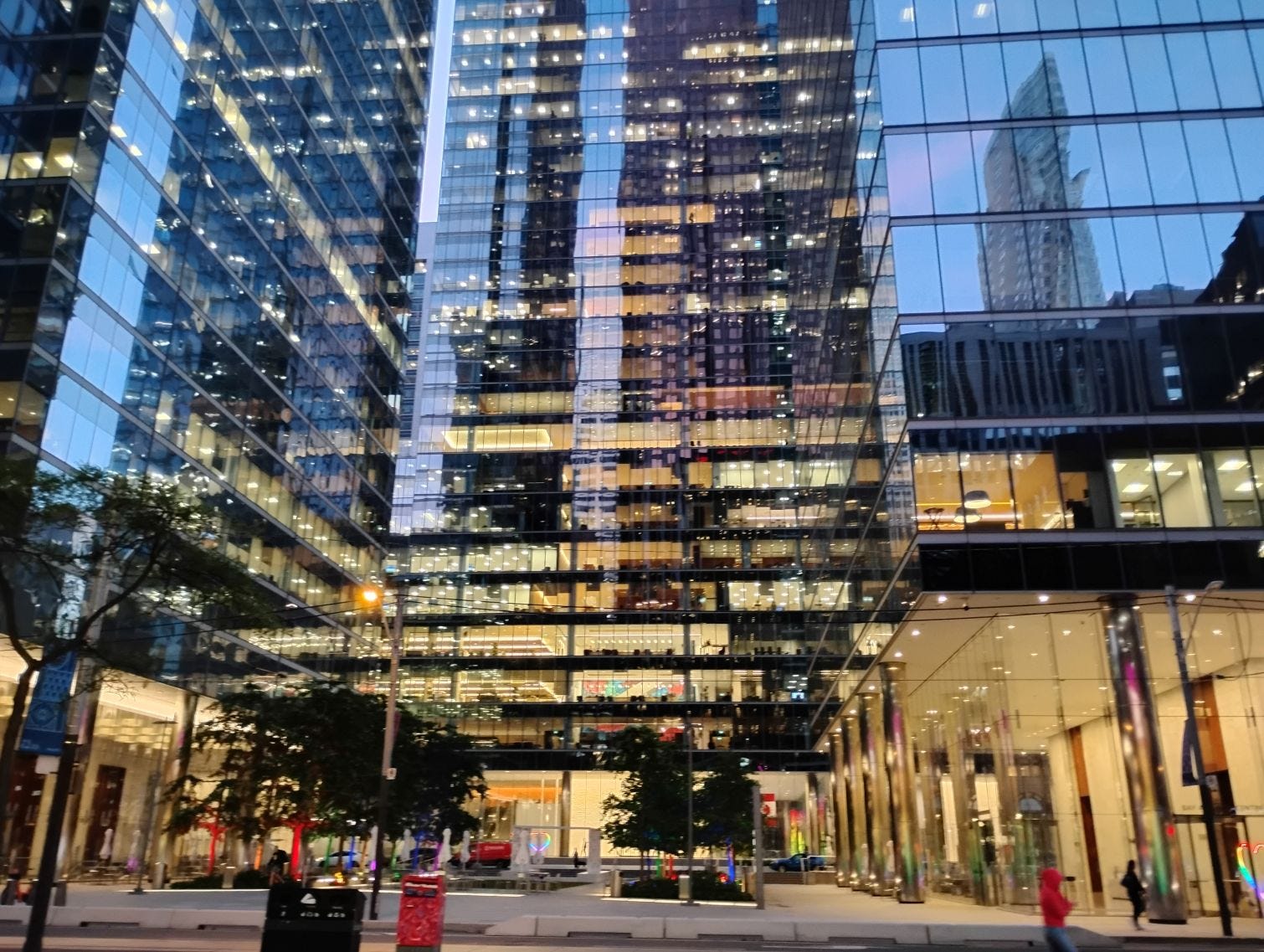
Circling back to Adelaide you come out to this view:
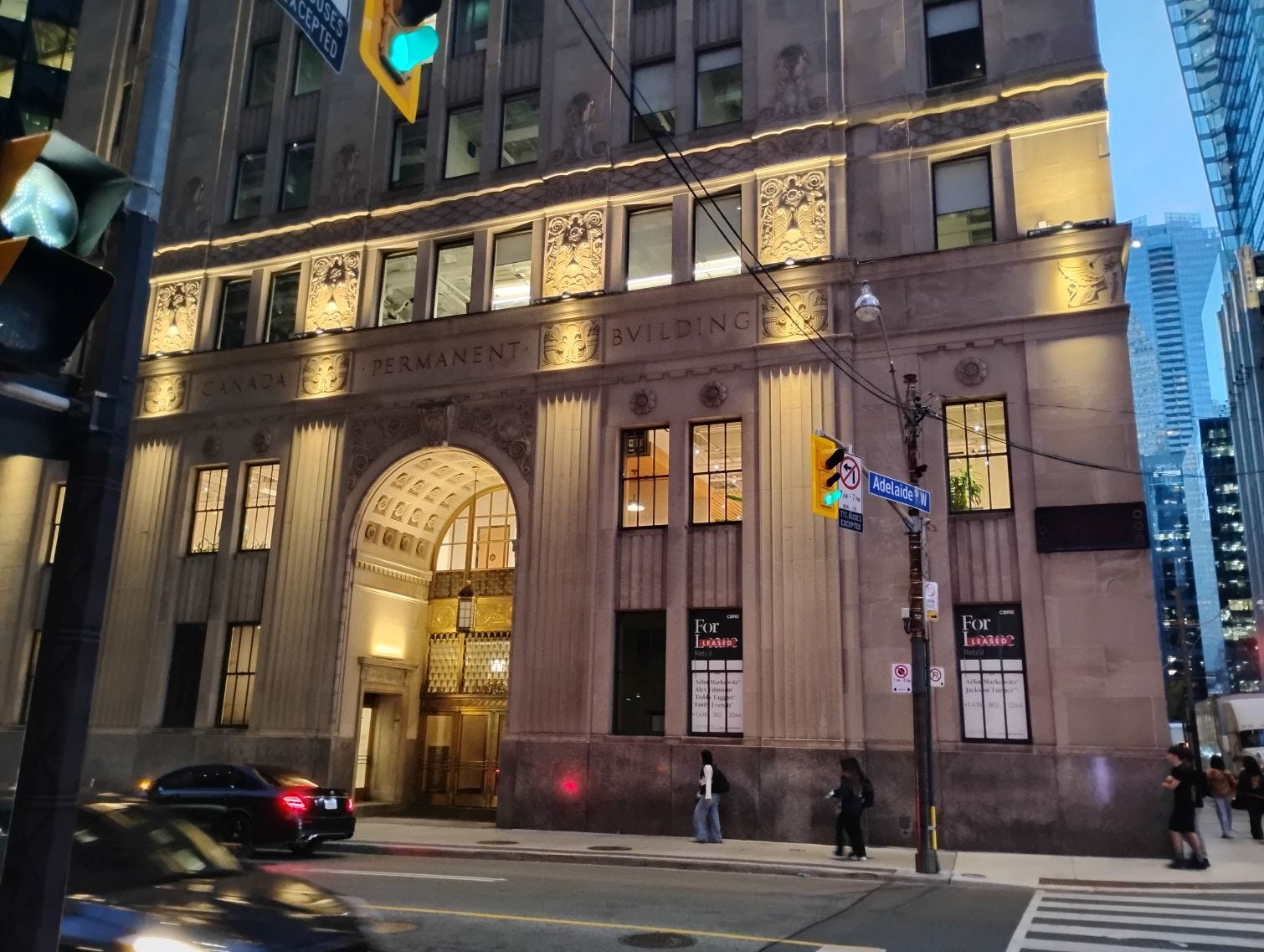
As you hit Bay further west, a heritage bank tower with the lobby under renovation: the art deco Canada Permanent Trust Building (1920s). You can only take a peek from the outside:
Pass the Cactus Club and cross towards the Pret on the other side, and look at this solid case of façadectomy: the old Concourse building gone, its facade incorporated in a new mega tower:
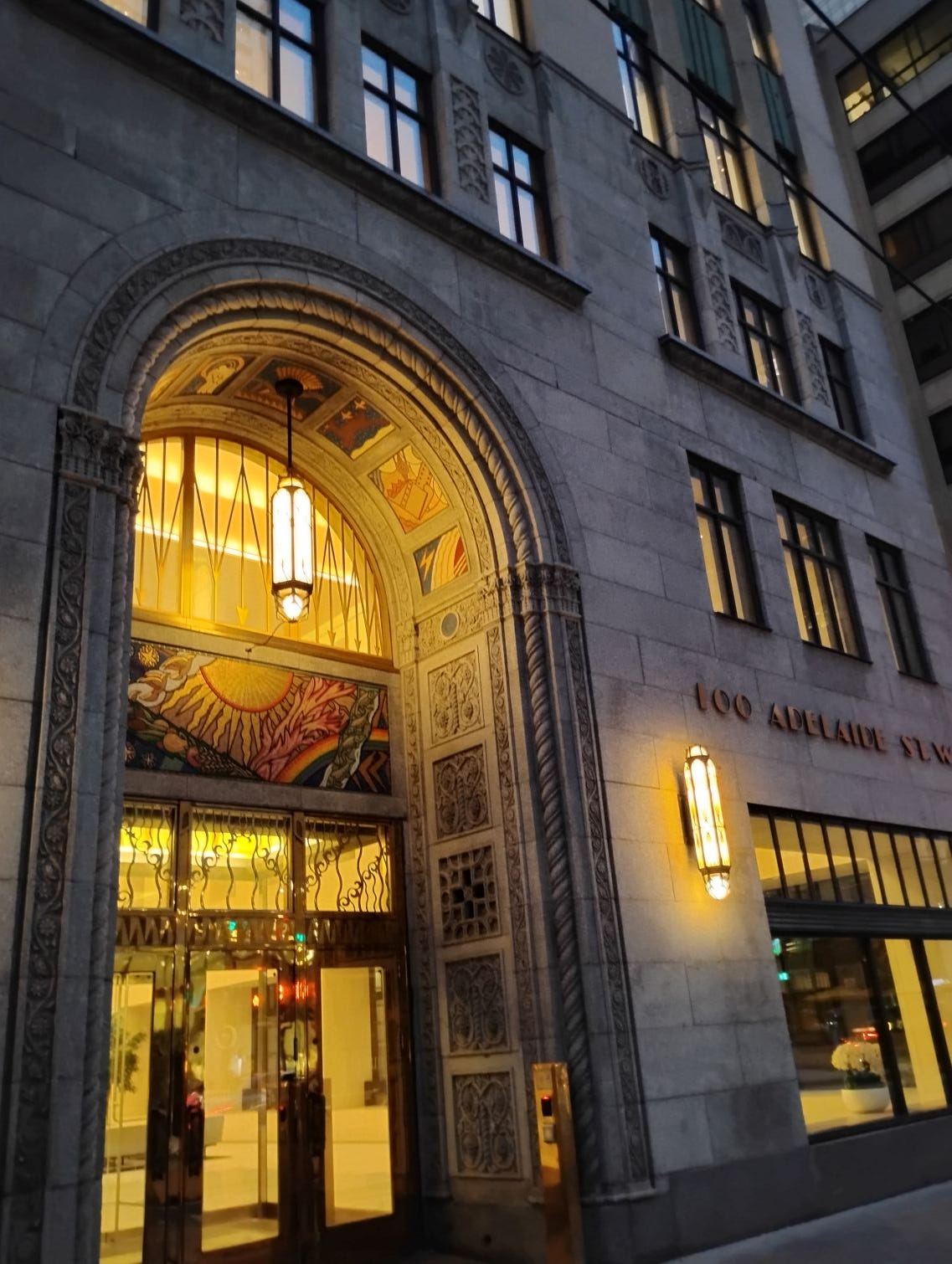
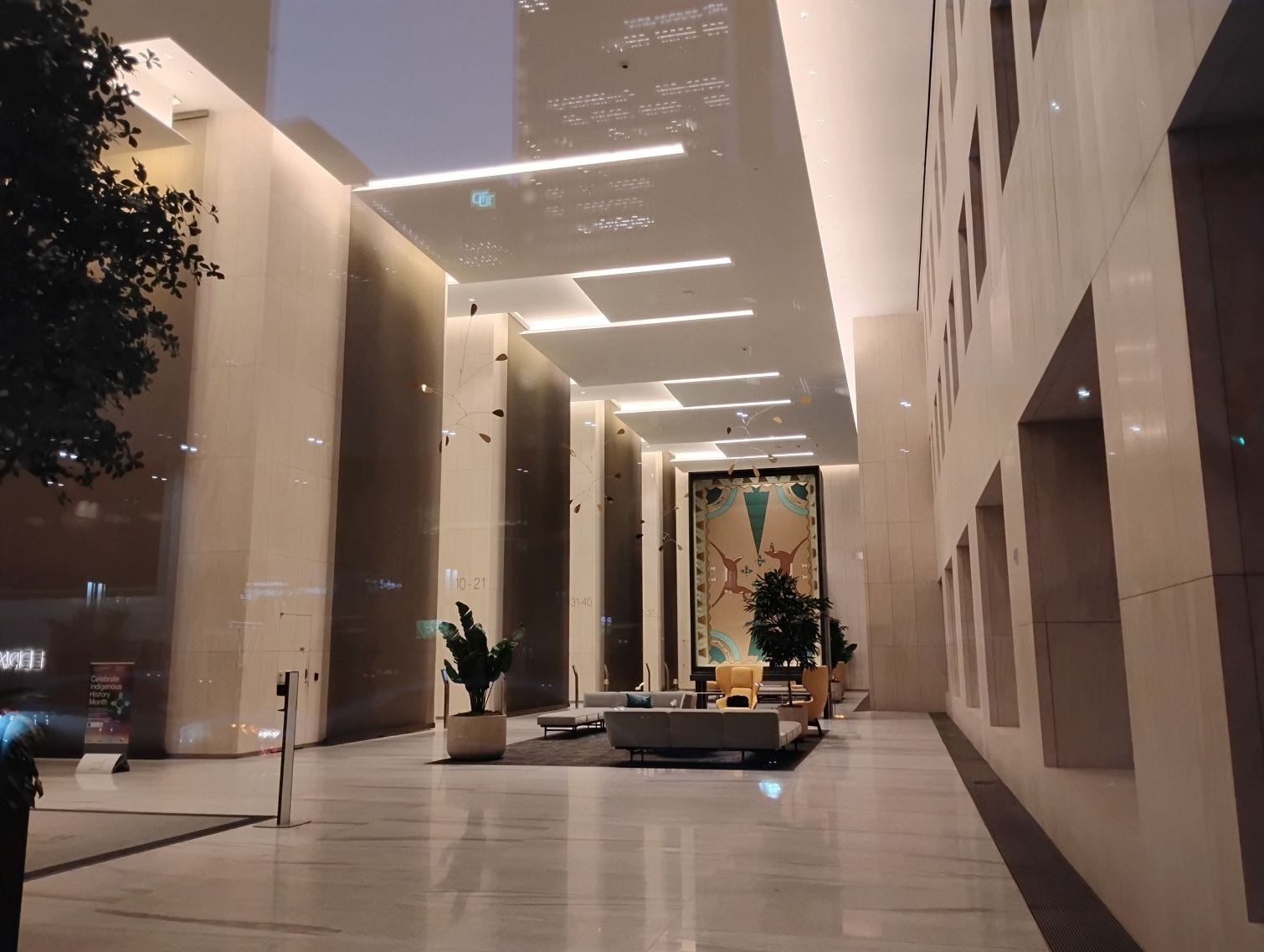
Some of the murals and ornaments survive, and you can see here the transformation. The new EY building contains a huge and improved lobby:
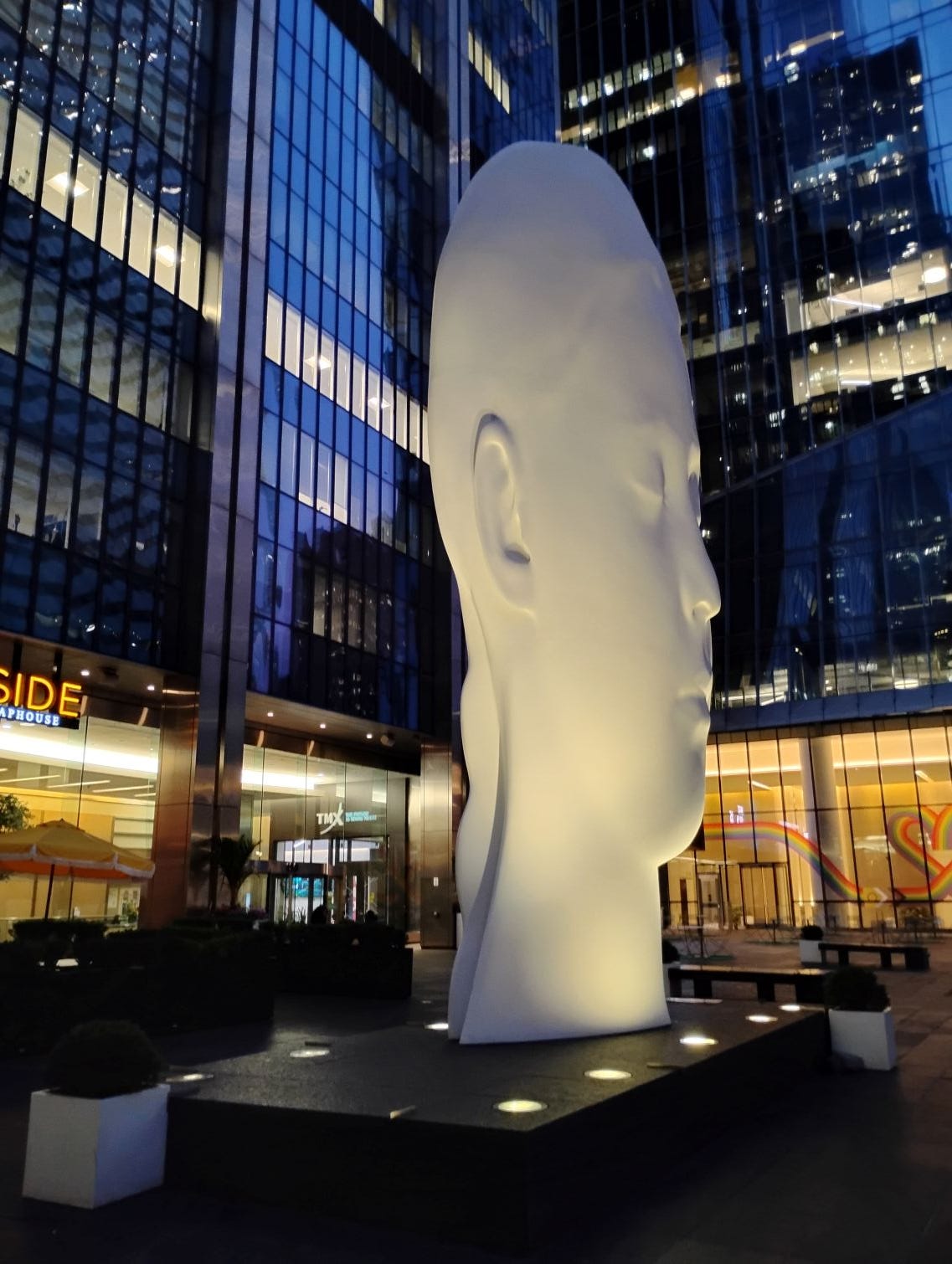
Strolling westward, you hit the square with the dreaming Lucia by the Catalan artist Jaume Plensa. His gigantic floating heads can be found around the world.
And we finish with the Thomson Reuters building, formerly the Southam Press building which was incorporated (again) into a gigantic new tower rather than torn down. A bit more than a case of facadism, the old building seems to have maintained its character as an autonomous unit within the new mega-establishment:
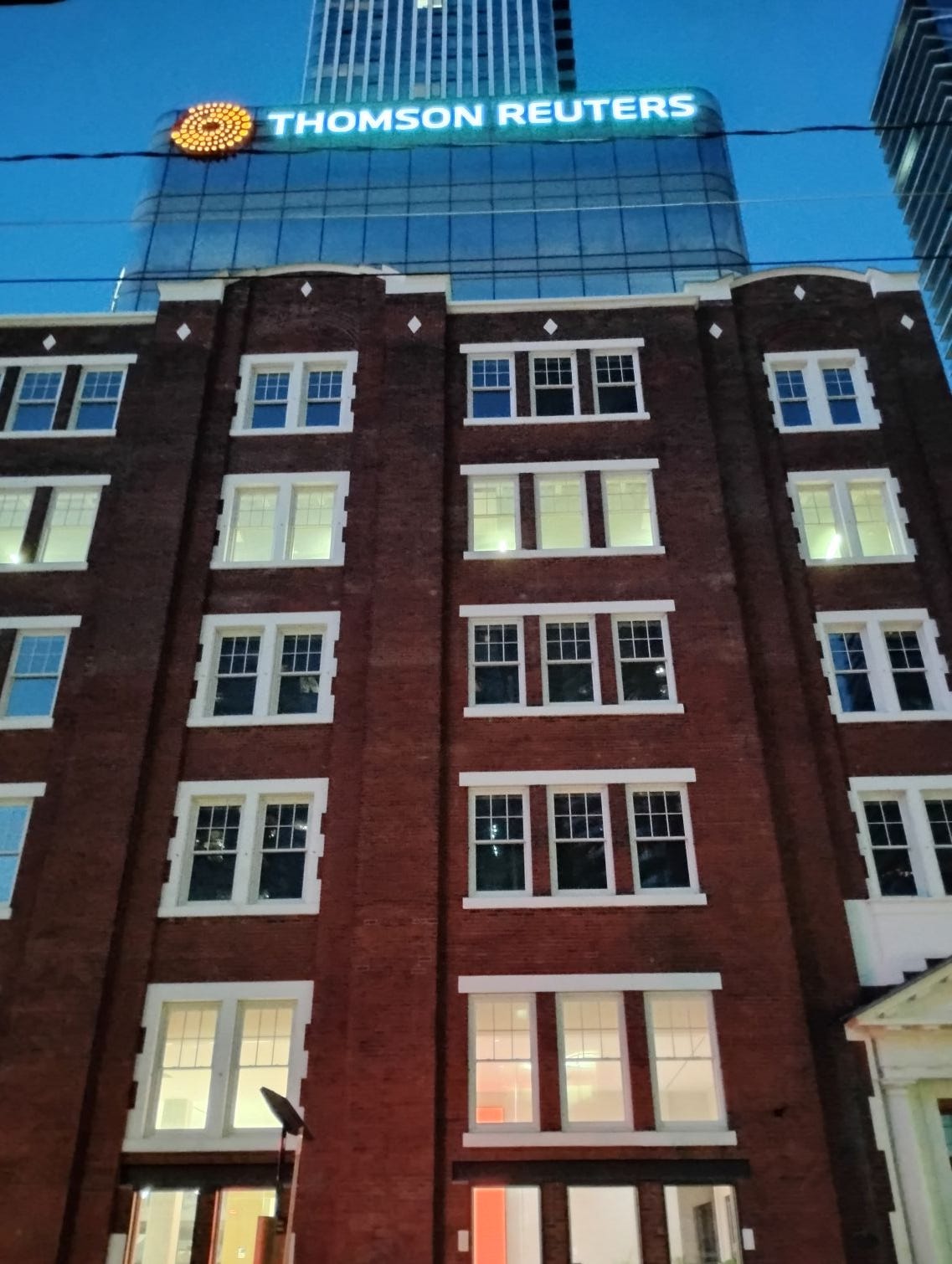
This has always been one of my favourite buildings to pass on Adelaide because it’s so pleasant to look at. Built in concrete with a red brick outer layer, it occupies the spot on Duncan St where the Upper Canada College used to stand before it moved uptown. The lobby is appropriately vast:
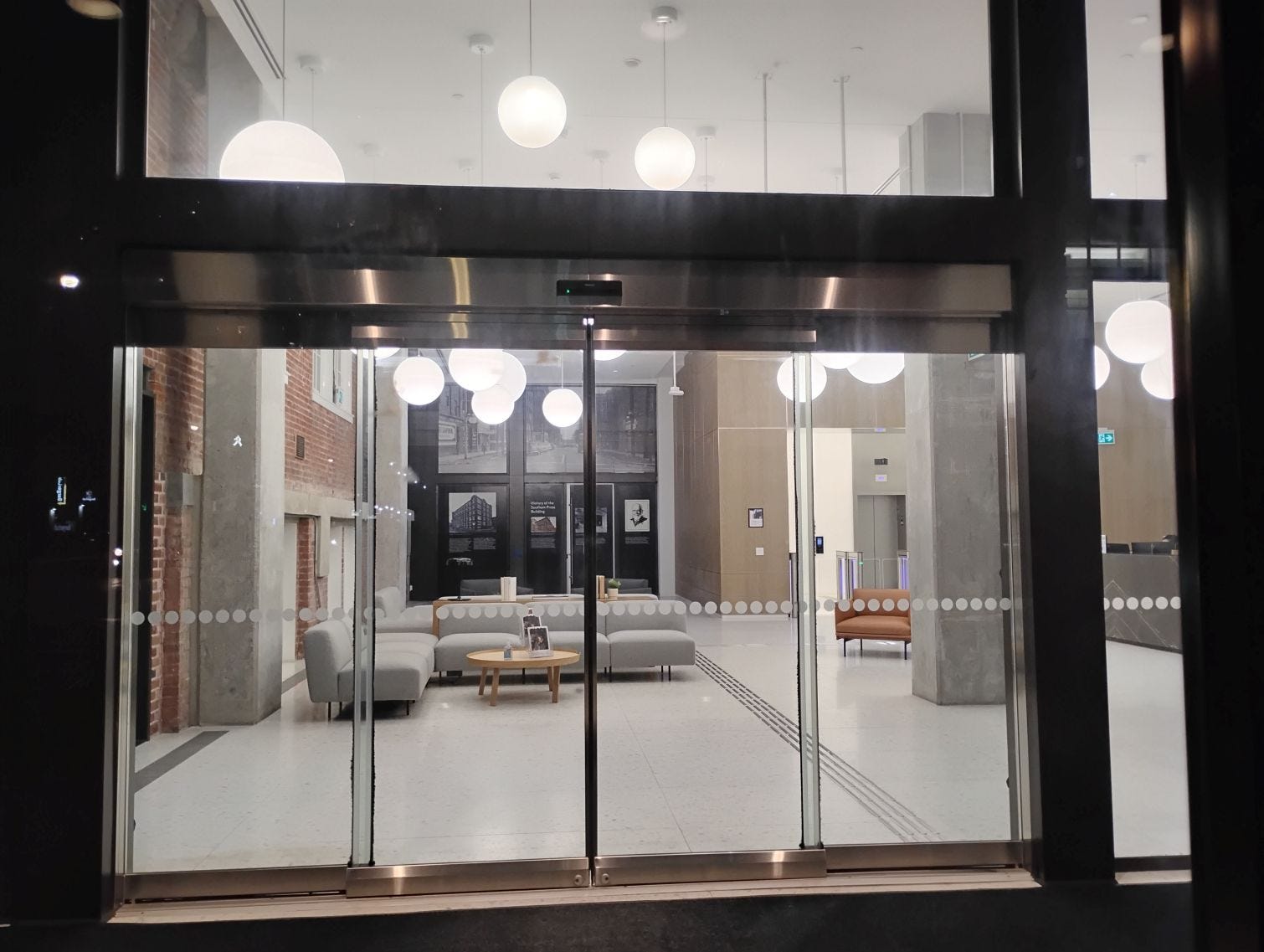
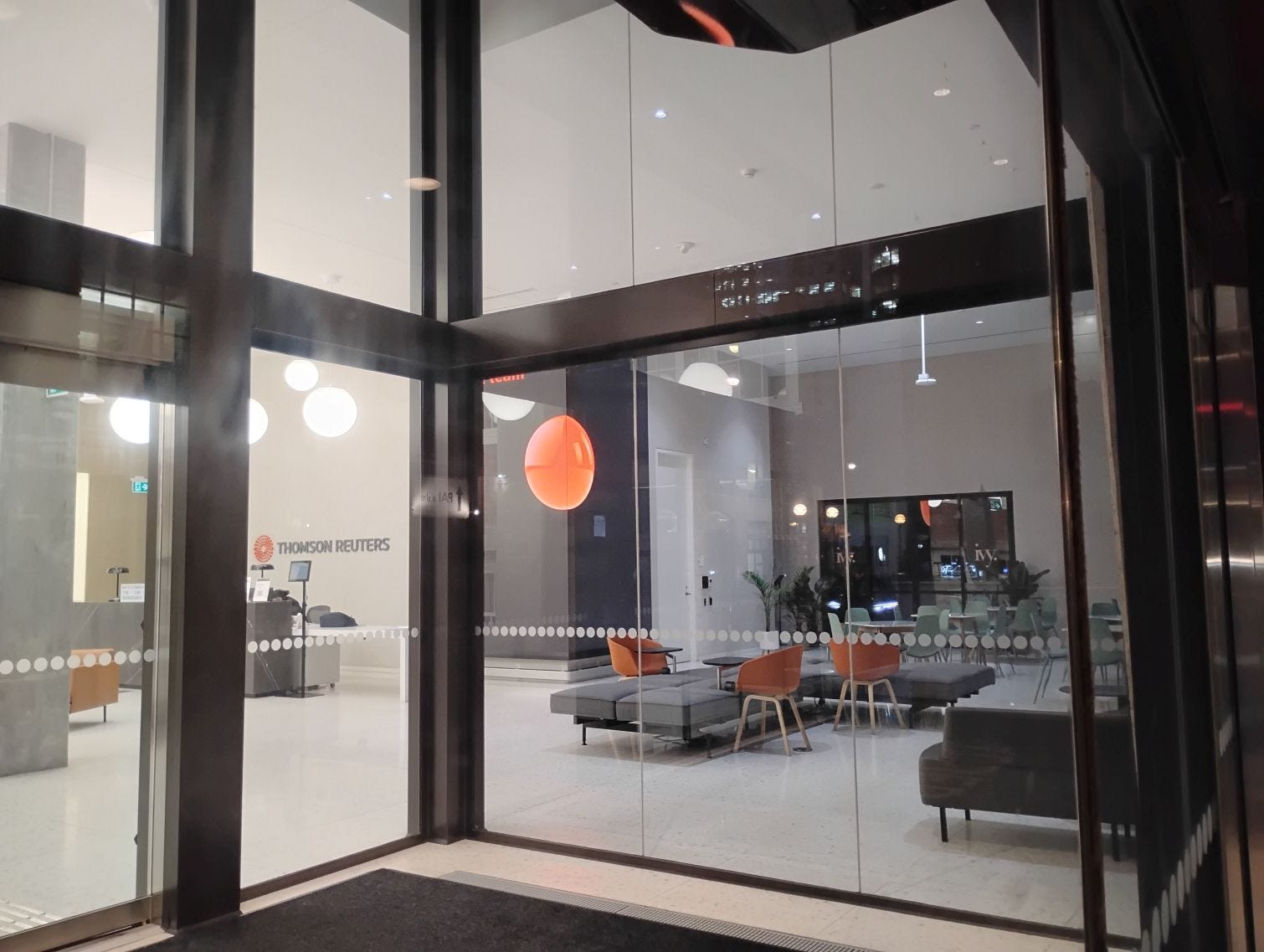
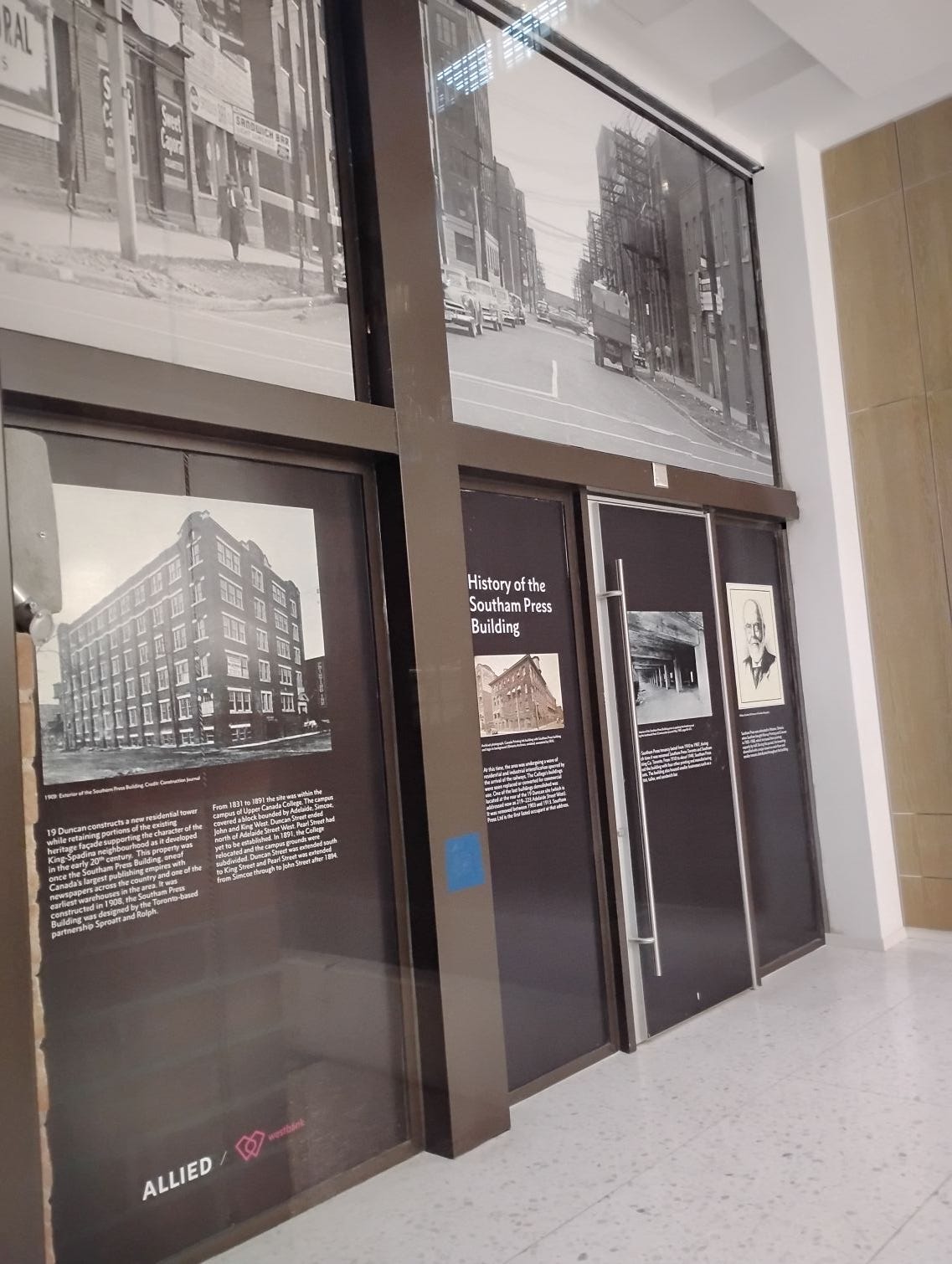
The Hariri Pontarini page about “The Toronto House” (very much not a house) and ERA architects explaining here what they did. Of interest, if you happen to be by during office hours, is the wall in the back, which is a small gallery about the history of the building.
PS: If you know anyone with access to the TD towers, hit me up. I’d like to go in and check out all the Mies van der Rohe-dictated designs and how they hold up this many decades later. In a recent tour for the festival of Bizarre Toronto History, Adam Bunch told a group of us a story about that accidental lawyer defenestration, so let’s not speak of it again. Nor of the movie American Psycho.
The book (by Michael Lewis) is more edifying than the movie, naturally. Strong recommend.