Victoria Memorial Square

There’s a small downtown park that I love but don’t visit very often because as well as being a quiet green space, it is a memento mori.
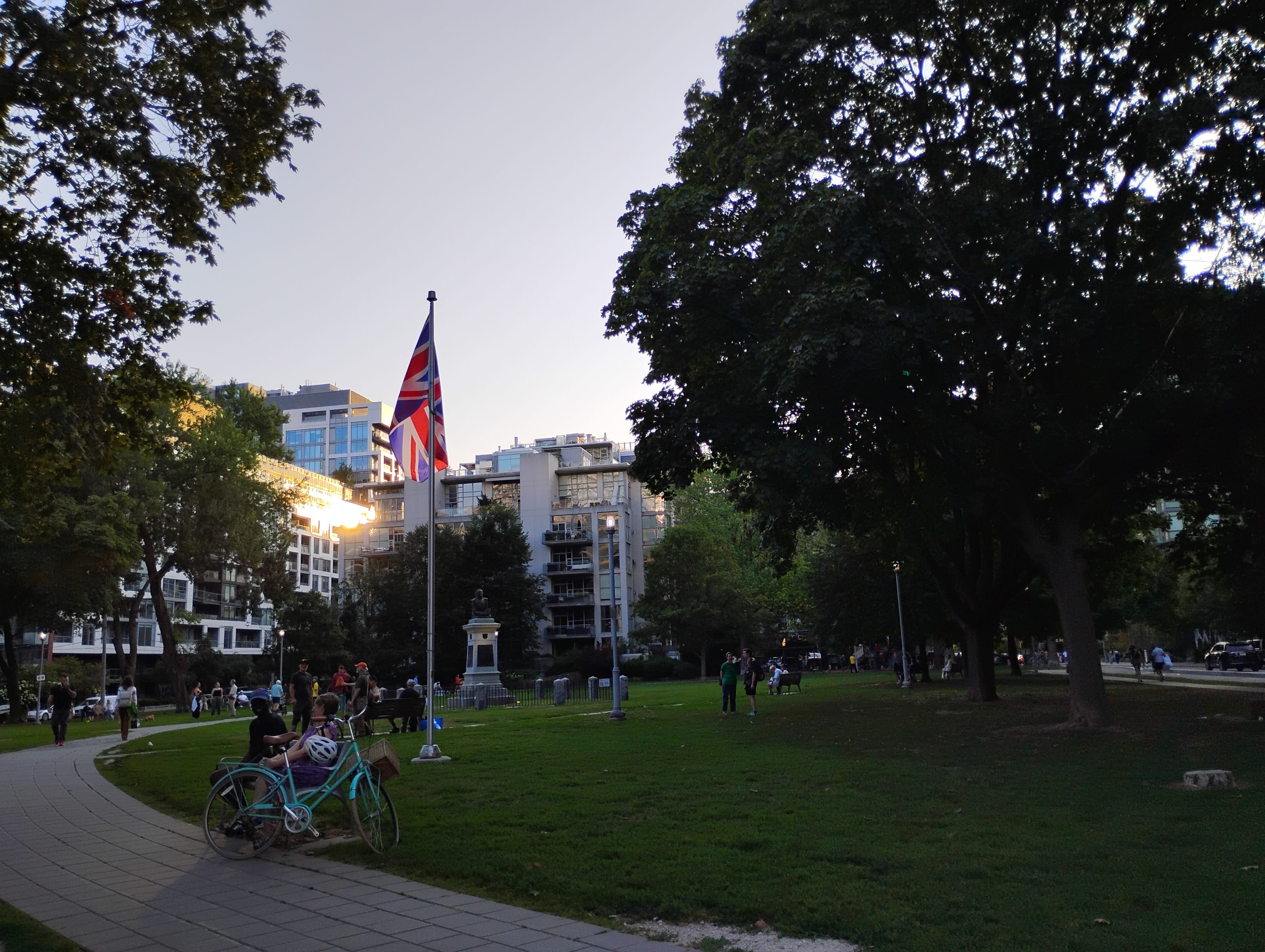
Victoria Memorial Square survived waves of development nestled in the entertainment and condo district because it’s a disused graveyard, the oldest one in the city besides. Originally known as St. John Square, the graveyard was established in 1793. The French Revolution was raging across the ocean, the USA was separated from the rest of the British North America for barely a couple of decades, and the recently appointed King’s representative in Upper Canada John Graves Simcoe and his wife Elizabeth have just lost a child. It was to be their one child born in what was not yet Canada. Katherine Simcoe was one and a half when she died suddenly.
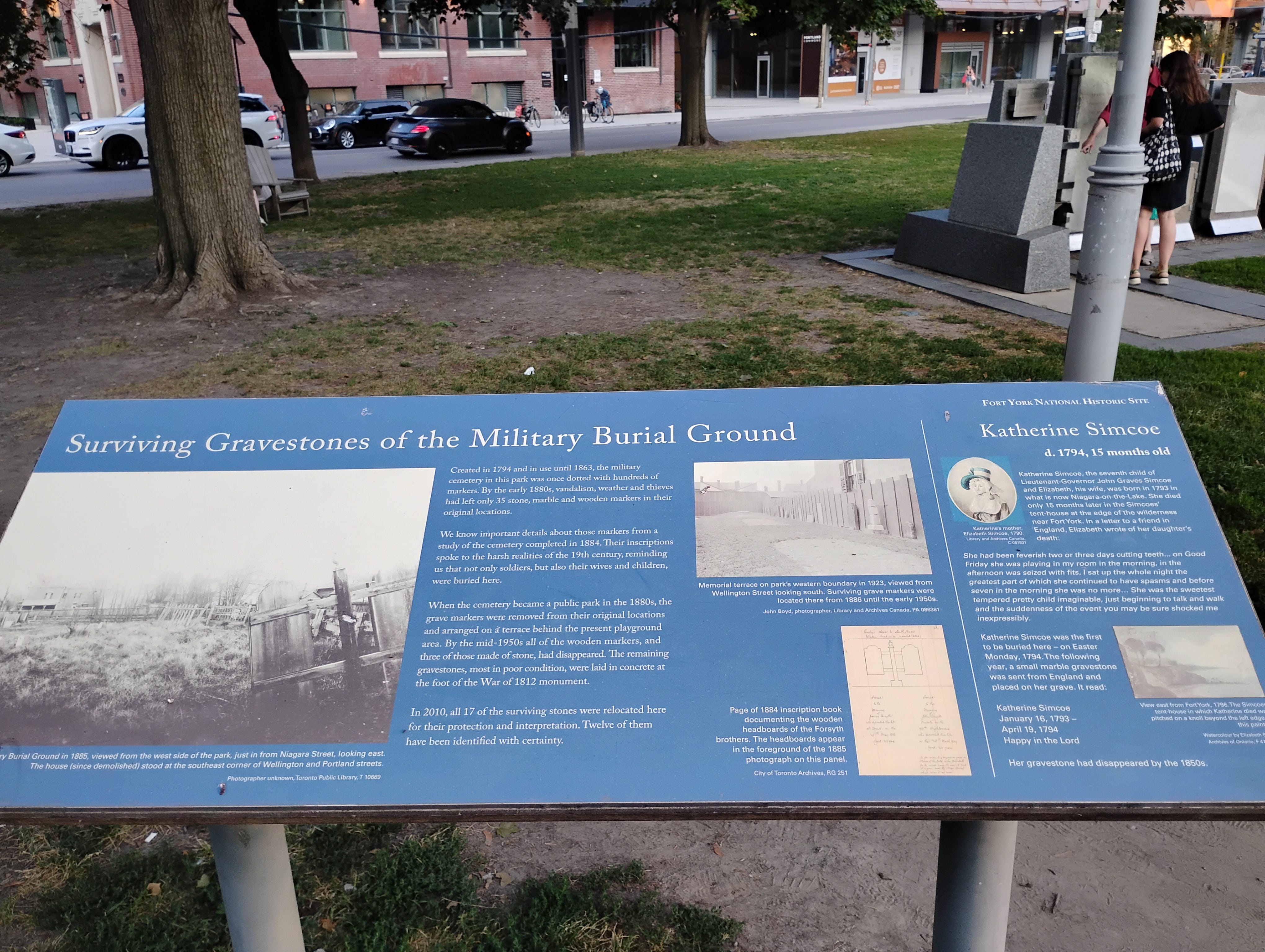
The prolific chronicler and aquarellist Elizabeth Simcoe remains mostly silent about the loss in her diary, the 1911 edition of which is now available online, search function included. The Simcoes were soon to return to England for good, leaving behind the small grave with a tombstone that had been shipped especially from the mother country, declaring the little Katherine “Happy in the Lord”.
She opened the joint which then started populating at a good clip.
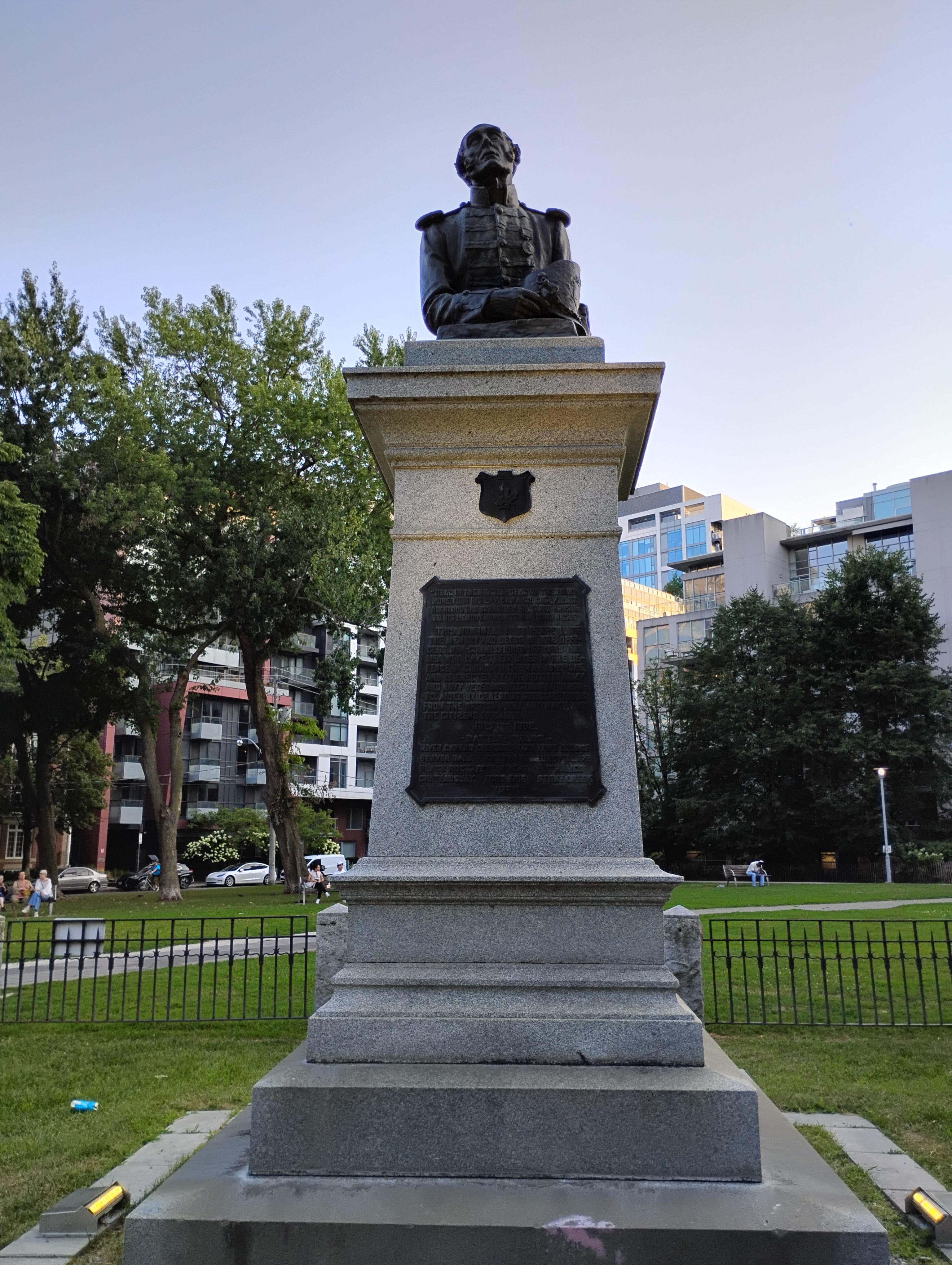
Mostly by members of the families of early settlers, and around the wars of 1812 by the military and their kin. There is a bust on the plinth in Victoria Square park commemorating those wars and those dead, and the soldier depicted couldn’t have looked more anguished as he’s clutching his hat. It’s a soldier in pain - heartache of some sort - not pride. The patriotic committee that commissioned the statue in 1902 from Walter Seymour Allward who will go on to create the Vimy Memorial was obviously fine with ambiguity.
Perhaps it’s a reflection on the wars of 1812 themselves. Resulting in a draw (battles lost on both sides, houses of leg/exec power burned on both sides), the 1812 wars remain a peculiarity. The British who dominated the seas and global maritime trade did not intend to let the Yankees disturb this hegemony in any way and would stop American frigates at will and scoop any sailors they deemed British deserters. Americans, according to the Brits, intended to expand their territory northward by conquest and needed to be stopped. Americans themselves, if they bother to remember it, describe it as the second War of Independence. Are you dozing off? Don’t just yet; Andrew Lambert, a star historian of naval warfare who wrote the definitive comprehensive book about the battles of 1812 argues that there was exactly one country for which the war was important: the future Canada. It was important; is it still, now, after almost a century of voluntary Americanization? Time rearranges things.
And maybe the anguished officer had an inkling.
By mid-nineteenth century the first urban cemetery in York-Toronto is almost entirely flattened, tombstones in the intervening decades decimated by weather, vandalism or theft. Katherine Simcoe’s was gone by 1850 too. In a recent restoration effort a handful of headstones were recovered, inscriptions and life stories only partially so. Multiple deaths by drowning, multiple children. Some only manage to yield the initials. “R.F.” reads one plaque.
Everybody in this invisible graveyard died twice: at the time of death, and on the day that their burial place marker went to dust. But the remains are just under the surface, which the developers did well to stay away from. (There are other disused graveyards in Toronto, one under the houses on Britain St. near Sherbourne, but those graves have been moved to the Toronto Necropolis before the development marched over.)
One of my favourite novels ever written is George Saunders’ Lincoln in the Bardo, which is incidentally set around the time that that the Victoria Square graveyard was coming into disrepair. It takes place at a different cemetery, one in which Abraham Lincoln had buried his young son. Bardo is a Buddhist version of what many religions understand to be the transitional, liminal space where the human spirits go after death and spend some time before the total annihilation. (Religions vary as to what the end destination is.) Orthodox Christianity from my part of the world sees the soul of the departed as lingering for 40 days among its loved ones before it’s well and truly transported into the otherworld. In the Greek mythology, mortals have gone across attempting to retrieve the dead, usually to catastrophic results. If you’re a goddess, like Persephone, you could find yourself in a contractual obligation to spend winter months in the Underworld with your horrible spouse Hades.
In Saunders’ limbo, ghosts are chattering, gossiping, adventurous busybodies confined to the graveyard of their burial with other human spirits serving the limbo time, trying to fix - alas - the unfinished business left behind. They can also dive into the living, freely miscegenating while the living Americans largely choose not to. Multiple ghosts taking a ride in one visiting human (say, Abraham Lincoln, anguished in the manner of our soldier on the plinth) can result in new insights and new forms of communing across individual human boundaries.
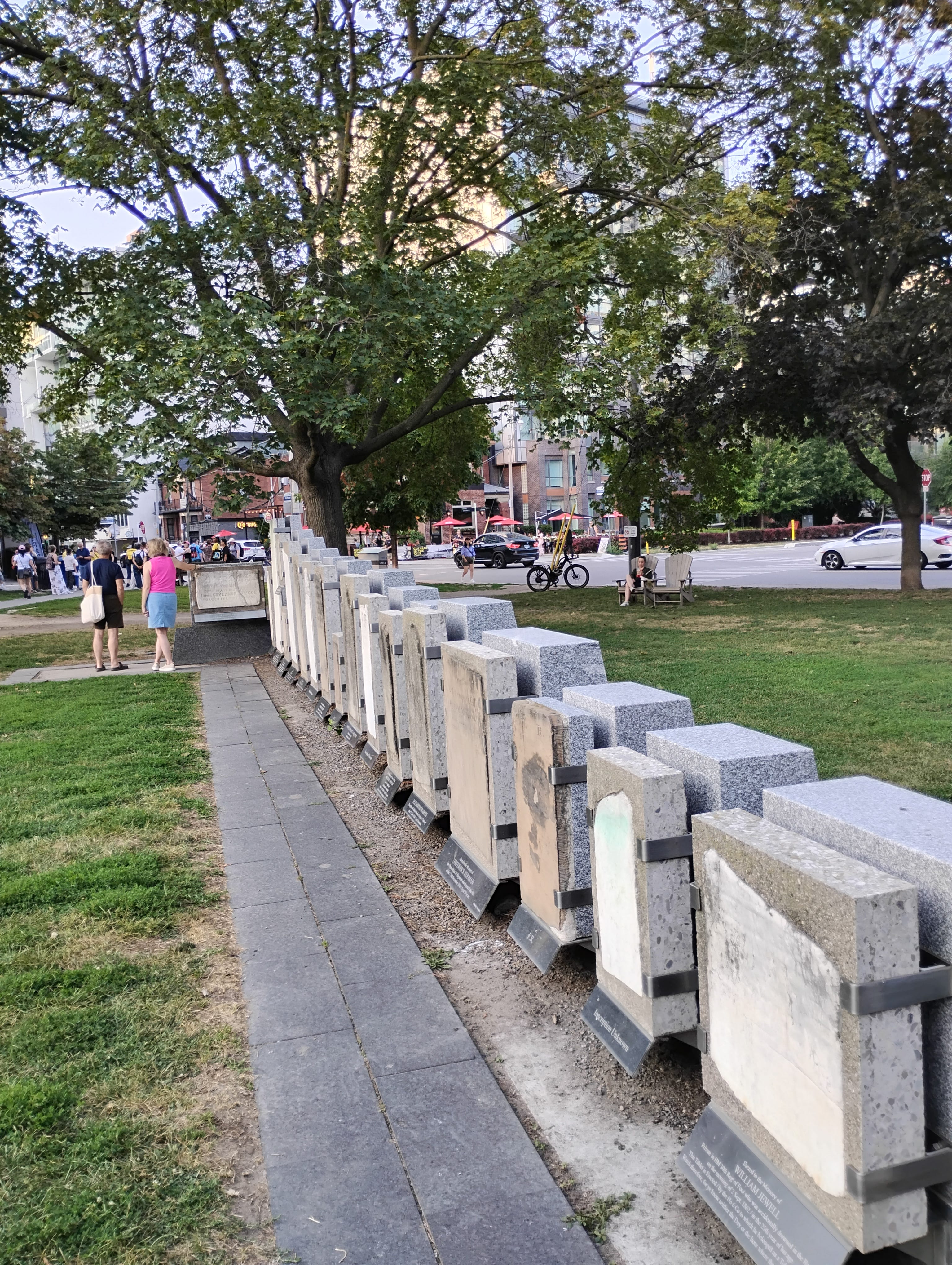
The Saunders bardo cemetery often comes to mind when I’m in Victoria Square park, reading the inscriptions, listening for the whispers of past women and men. Oblivious urban Ezekiels in the Valley of Dry Bones, people in the park lounge in Muskoka chairs, take a shortcut across, walk their dog, with no God intervening to join the bones together, pace the Red Clay Ramblers and the Delta Rhythm Boys.
The murmur is there if you pay attention. We are the women, men and children who lived long ago. You can’t begin to imagine our lives, you spoiled entitled brats of the W.E.I.R.D. era which will last but a blink. See you on the other side.